 Uyuni Salt Flats Trips
San Pedro de Atacama to Uyuni: How the Crossing Works
Going from San Pedro de Atacama to Uyuni means crossing the Andes at the Hito Cajón pass, 4,480 m above sea level, almost always on a multi-day 4x4 tour rather than a public bus. This guide covers both directions: the 3-day and 4-day jeep routes, Chilean exit formalities and the SAG food declaration, Bolivian entry at the pass, visa and registration rules, the altitude jump on day one, and what the public bus option from Uyuni actually involves. We compare the tours on price and what their listed price really covers, because fees paid in cash at the border add up. For the salt flat itself, see our Uyuni tours with their real totals.
Quick answer The crossing in short
Yes, you can visit the Uyuni Salt Flats from Atacama, and the standard way is a multi-day 4x4 tour that crosses at Hito Cajón, a Bolivia-Chile pass at 4,480 m. Prices for the tours we compared run from $290 to $450 before the cash fees, which are paid separately at the border and in the reserve.
Key takeaways
- See the 4-day round trip from San Pedro de Atacama, the San Pedro de Atacama: 4-Day Uyuni Salt Flats Tour at $332.
- Prefer to end in Chile? The 3-day tour ending in San Pedro de Atacama runs Uyuni to the border with the transfer included.
- Not taking a tour? The direct Uyuni to San Pedro bus costs about $47 and takes around 12 hours.
- Day one is a big altitude jump into the reserve, which sits between 4,200 m and 5,400 m. Read our altitude sickness guide before booking.
How the San Pedro de Atacama to Uyuni Crossing Works
There is no railway or easy road link between the two towns. The practical options are a tour jeep through the Eduardo Avaroa reserve or a long public bus ride.
The Hito Cajón Pass
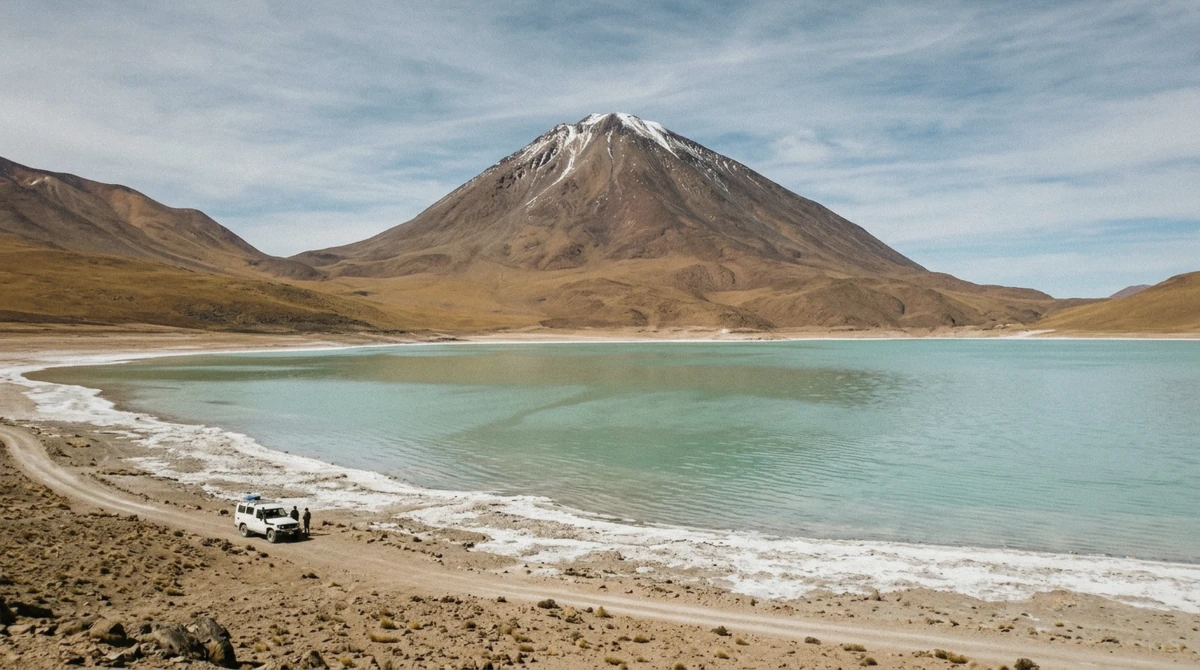
The border crossing is at Portezuelo del Cajón, better known as Hito Cajón. It sits at 4,480 m (14,700 ft) on the lower southeast flank of Juriques volcano, close to Licancabur, inside the Eduardo Avaroa reserve near Laguna Verde and Laguna Blanca. Bolivian customs are processed right at the pass summit.
The geography of the crossing is unusual in one important way. Chilean customs formalities are completed in San Pedro de Atacama town itself, about 45 km (28 mi) from the pass. So the exit stamp happens before you leave town, and the border post at the pass handles the Bolivian side. Tour operators build this into day one: paperwork in San Pedro in the morning, then the drive up to the pass.
Tour jeep versus public bus
Almost everyone crosses on a jeep tour, because the route between the border and Uyuni passes through the lagoons and deserts of the reserve, and that is the point of the trip. A direct public bus does exist in the other direction, from Uyuni to San Pedro de Atacama, but it is a long haul rather than a sightseeing trip. Details are in the bus section below.
Note that there is no bus that crosses at Hito Cajón itself. The public bus route crosses at Avaroa-Ollagüe instead, a completely different border, so the bus is a transport option only and skips the reserve entirely. If you want the lagoons and the salt flat, you need the tour. For what the lagoon route contains stop by stop, see our Laguna Colorada and southwest lagoons guide.
Sources: Salar de Uyuni on Wikipedia and UK travel advice for Bolivia.
Which Direction Ends Where
Tours run both ways across the border, and the direction you pick decides where you sleep and where you finish.
San Pedro to Uyuni, 4 days
The 4-day round trip from San Pedro de Atacama is the option for travelers who want to start and finish in Chile. The San Pedro de Atacama: 4-Day Uyuni Salt Flats Tour costs $332, lasts 4 days and 3 nights, and returns to San Pedro at the end. It runs Laguna Blanca, Laguna Verde, the Salvador Dalí Desert, the Polques hot springs, the Sol de Mañana geysers, Laguna Colorada and then the salt flat and Incahuasi Island.
Because it loops back into Chile, you cross the border twice and you keep your onward flights and buses in Chile intact.
Uyuni to San Pedro, 3 days
The classic route runs from Uyuni across to the Chilean border. The 3-day tour ending in San Pedro de Atacama costs $450 and includes the transfer into Chile in the listed price, with meals and 2 nights of accommodation. It covers the salt flat, the Siloli Desert, the reserve, the geysers, the hot springs and the Green Lagoon, and drops you in San Pedro. This suits travelers continuing south into Chile or Argentina.
Most 3-day tours from Uyuni, however, end back in Uyuni and treat San Pedro as a paid extra. The 3-day salt flat and colored lagoons tour lists at $290 and finishes in Uyuni or San Pedro, but the border transfer is not included. The 3-day Laguna Colorada tour lists at $309.90 and names the onward bus to San Pedro as an optional $25 extra. Check that line before booking, because it changes the real cost of the crossing by more than the price gap between tours suggests. Read our Uyuni tour cost breakdown for the full picture.
| Tour | Price | Direction | Border transfer included |
|---|---|---|---|
| 3-day from Uyuni (Andes Salt Expeditions) | $290, mandatory extras bring it to $352 | Uyuni to Uyuni or San Pedro | No, excluded |
| 3-day from Uyuni (Tours Transandino) | $309.90, extras bring it to $319.90 | Uyuni to Uyuni or San Pedro | No, optional $25 bus extra |
| 3-day from Uyuni (On Experiences) | $450 | Uyuni to San Pedro | Yes, included |
| 4-day from San Pedro (White & Green) | $332 | San Pedro round trip | Both crossings included |
| Direct bus Uyuni to San Pedro (Cruz del Norte) | about $47 | Uyuni to San Pedro | Crosses at Avaroa-Ollagüe |
San Pedro De Atacama to Uyuni on Video
The crossing from Chile at the Hito Cajón border and the lagoons after it, day by day. Third-party video by Kitti and Jon. We did not shoot it and have no relationship with the creator.
What the Crossing Really Costs
The listed tour price is not the trip price. Cash fees are collected on the way, and the biggest ones come at and after the border.
Fees paid in cash
Foreign visitors pay 150 Bs (about $13) to enter the Eduardo Avaroa reserve, in cash, and this fee is usually not included in tour packages. Isla Incahuasi adds around 30 Bs (about $3) per person, paid at a booth at the island's base. The Termas de Polques hot springs charge around 5 Bs for the changing room, and the pool itself has no separate admission. The Andes Salt Expeditions and Tours Transandino 3-day listings both exclude the sleeping bag, so budget for a rental there.
The 4-day tour from San Pedro does not list park entrance fees among its confirmed inclusions, even though a line in its Includes text mentions them, and its listing suggests carrying 300 Bolivianos in cash for entrances and purchases. That honesty matters: budget the cash before you go, and note there are no ATMs near the salt flat. Our packing list for Uyuni covers the cash question in full.
Cash totals also depend on where you change money. The dollar figures on this page use a market rate of 1 USD = 11.24 Bs. Bolivia's central bank published an official rate of Bs 11.52 per US dollar, and a higher parallel street rate also exists that is not an official quotation.
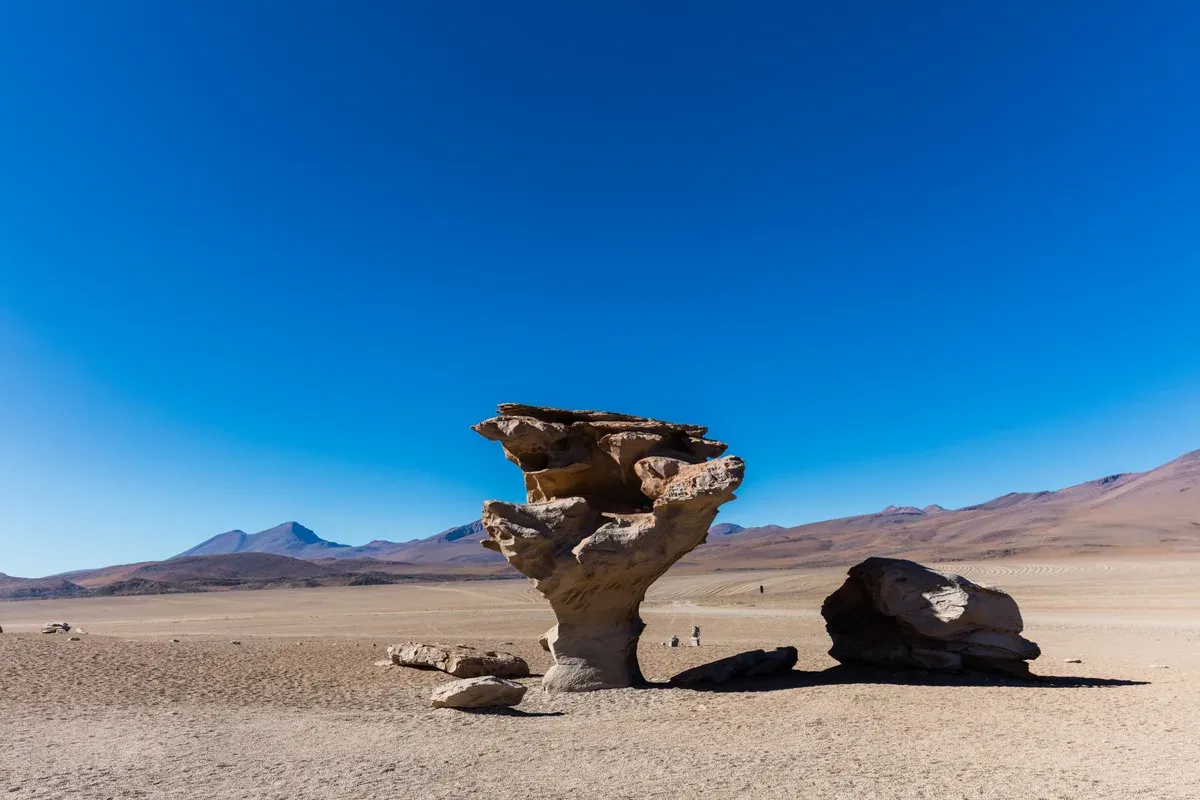
Árbol de Piedra in the Siloli desert. Photo: Diego Delso, CC BY-SA 4.0, via Wikimedia Commons
Border Formalities in Both Directions
Chilean exit paperwork happens in San Pedro town, Bolivian entry happens at the pass, and the food rules catch returning travelers out.
Leaving Chile: customs and the SAG declaration
Chilean customs are completed in San Pedro de Atacama town, before the jeep departs for the pass. Anyone entering Chile, which on the return leg means you, must make a sworn declaration to SAG, Chile's agricultural service, covering any plant or animal-origin goods, byproducts, handicrafts made from them, agricultural chemicals, veterinary pharmaceuticals or animal feed. Failure to declare risks fines and confiscation.
The categories commonly barred from entry without prior authorization include milk, butter, cream and cheese, fresh fruit and vegetables, meats and cured meats, seeds, grains and dried fruit, and ornamental plants or parts of them. Practically, the cheese, fruit and cured-meat snacks bought in Bolivia cannot come back into Chile in your daypack. Coca leaf is legal in Bolivia but becomes an illegal narcotic under international law once carried out of the coca-producing countries. Finish or leave these before the Chilean checkpoint.
Entering Bolivia: visas and registration
For US citizens the visa rule changed at the end of 2025. Bolivia ended the visa requirement for US tourists and business travelers, who can now enter visa-free for tourism for up to 90 days. The US Embassy in Bolivia announced the change publicly, a couple of weeks after a message saying visas were still required. The sources used here cover only the US change, so other nationalities should confirm their own rules with a Bolivian consulate.
Separately from any visa, Bolivia runs a mandatory online immigration registration called SIGEMIG at the official portal migracion.gob.bo. All foreign travelers, including minors, must register individually before or on arrival, providing lodging details for the full stay. Non-compliance is fined on exit. That is worth knowing if you plan to continue from Uyuni to La Paz or onward, which our La Paz to Uyuni guide covers separately.
The Altitude Jump on Day One
Starting the crossing from San Pedro is the hardest altitude progression of any Uyuni approach.
How high you go and how fast
The border pass itself sits at 4,480 m, and the Eduardo Avaroa reserve through which day one runs spans 4,200 m to 5,400 m. The salar far to the north lies at about 3,663 m. So a traveler who spends a few comfortable days in San Pedro and then joins a tour is above 4,400 m on day one. The 4-day tour sleeps that first night at a hostel in Quetena Chico, and no elevation for Quetena Chico is published in the sources used here.
CDC guidance warns against jumping directly from below 1,200 m to a sleeping altitude above 2,750 m in a single day, and recommends moving sleeping altitude by no more than about 500 m per night above 3,000 m. The crossing breaks that rule by design. Both crossing listings also rule out pregnant travelers and people with back problems, and the 3-day tour ending in San Pedro rules out children under 3. Coca tea is legal in Bolivia and offered as a traditional remedy, but no clinical trial evidence supports it. Read our Uyuni altitude sickness guide for symptoms, oxygen and when to turn back, and consider acclimatizing in La Paz or Uyuni first if you are starting from the Bolivian side instead.
The Public Bus Alternative
If you only want transport between the two towns, a direct bus exists from Uyuni to San Pedro de Atacama, and it does not use Hito Cajón.
Uyuni to San Pedro by bus
Cruz del Norte runs a direct semi lie-flat bus departing Uyuni at 6:15 AM and arriving in San Pedro de Atacama about 6:15 PM, roughly 12 hours over 522 km, for a fare of about $47. The buses have no onboard bathroom, and border formalities are handled at Avaroa-Ollagüe, a different crossing from the Hito Cajón pass the tours use.
A second routing breaks the trip in two: a bus from Uyuni to Calama taking 9 to 11 hours, then a separate onward bus or transfer from Calama to San Pedro de Atacama, about 1.5 hours over roughly 100 km. For the reverse journey, San Pedro to Uyuni, the sources used here list no public bus route, so the tour jeeps are effectively the only scheduled option in that direction. If you take the bus, remember you skip the reserve and the lagoons entirely, and you will need a separate day tour from Uyuni to see the salt flat.
Which Crossing Option Suits You
The right choice depends on where you finish, how many days you have and if you want the reserve.
If You start and end your trip in Chile and want the salt flat and the lagoons
Take the 4-day round trip from San Pedro at $332, the San Pedro de Atacama: 4-Day Uyuni Salt Flats Tour, and budget 300 Bolivianos in cash for entrances.
If You are traveling north to south through Bolivia and finishing in Chile
Take the 3-day tour ending in San Pedro de Atacama at $450, which includes the transfer into Chile in the listed price.
If You are starting in Uyuni and price matters more than the drop-off point
Compare the Uyuni-based 3-day routes and price in the extras, starting with the 3-day lagoons tour listing, then add the reserve fee in cash and the transfer cost if you need it.
If You only need transport and can skip the reserve
Take the Cruz del Norte direct bus from Uyuni at about $47, and book a separate day tour from Uyuni for the salt flat itself.
If You are pregnant, have back problems or have a history of altitude sickness
Reconsider the crossing by tour, because day one climbs above 4,400 m and both crossing listings rule out pregnant travelers and people with back problems. See our altitude guide.
FAQ
Can I visit the Uyuni Salt Flats from Atacama?
Yes. The standard way is a multi-day 4x4 tour from San Pedro de Atacama that crosses at Hito Cajón, 4,480 m above sea level, and runs through the Eduardo Avaroa reserve to the salar. The 4-day round trip from San Pedro does the whole loop and returns to Chile.
How much does a tour from San Pedro de Atacama to Uyuni cost?
The tours we compared list between $290 and $450 before cash extras. On top of the listed price comes the Eduardo Avaroa reserve entrance of 150 Bs (about $13) in cash and other small fees. Our Uyuni tour cost guide totals the real figures.
Do I need a visa to cross from Chile into Bolivia at Hito Cajón?
US citizens no longer need a visa for tourism since a rule change at the end of 2025, which allows visa-free entry for up to 90 days. All foreign travelers, whatever their nationality, must complete Bolivia's SIGEMIG online registration before or on arrival. Other nationality rules are not stated in the sources we use.
Is there a bus from Uyuni to San Pedro de Atacama?
Yes. Cruz del Norte runs a direct semi lie-flat bus leaving Uyuni at 6:15 AM and arriving about 6:15 PM, around 12 hours over 522 km for about $47. It crosses at Avaroa-Ollagüe, not Hito Cajón, so it skips the reserve. If you take it, add a day tour from Uyuni for the salt flat.
What food can I bring back into Chile after the tour?
Chile's SAG rules require a sworn declaration of any plant or animal-origin goods, and categories such as fresh fruit and vegetables, dairy, meats and cured meats are commonly barred without authorization. On the return leg of your 3-day crossing tour, finish or discard snacks and any coca products before the Chilean checkpoint in San Pedro.
How bad is the altitude on the first day from San Pedro?
The border pass sits at 4,480 m and the reserve spans 4,200 m to 5,400 m, so day one is a steep jump for anyone coming from lower ground. CDC guidance advises against jumping from below 1,200 m to a sleeping altitude above 2,750 m in one day, and day one drives straight from San Pedro up to the 4,480 m pass. Our altitude sickness guide explains the symptoms and fixes.
Can I do a 3-day tour from San Pedro de Atacama to Uyuni?
Not as a loop starting and ending in San Pedro in three days. The 4-day tour is the round trip from San Pedro, while the 3-day routes cross one way, running between Uyuni and the border. If your time is fixed at three days, start the route from the Uyuni side and continue into Chile, or see the One-day and three-day Uyuni tours compared for other lengths.