 Uyuni Salt Flats Trips
Best Time to Visit Uyuni Salt Flats
The best time to visit Uyuni salt flats depends on one choice: water or salt. From December to March rain spreads a shallow sheet across the 10,582 square kilometer crust and turns it into a mirror, with the highest-probability window in late January through early March. From April to November the salar is dry, the famous hexagon patterns show, the sky is clear for stars, and nights drop well below freezing. This guide walks through both seasons, a month-by-month climate table, what deep water does to the route, and which tour type suits which months. To see what each option costs before you pick a date, compare Uyuni salt flats tours side by side.
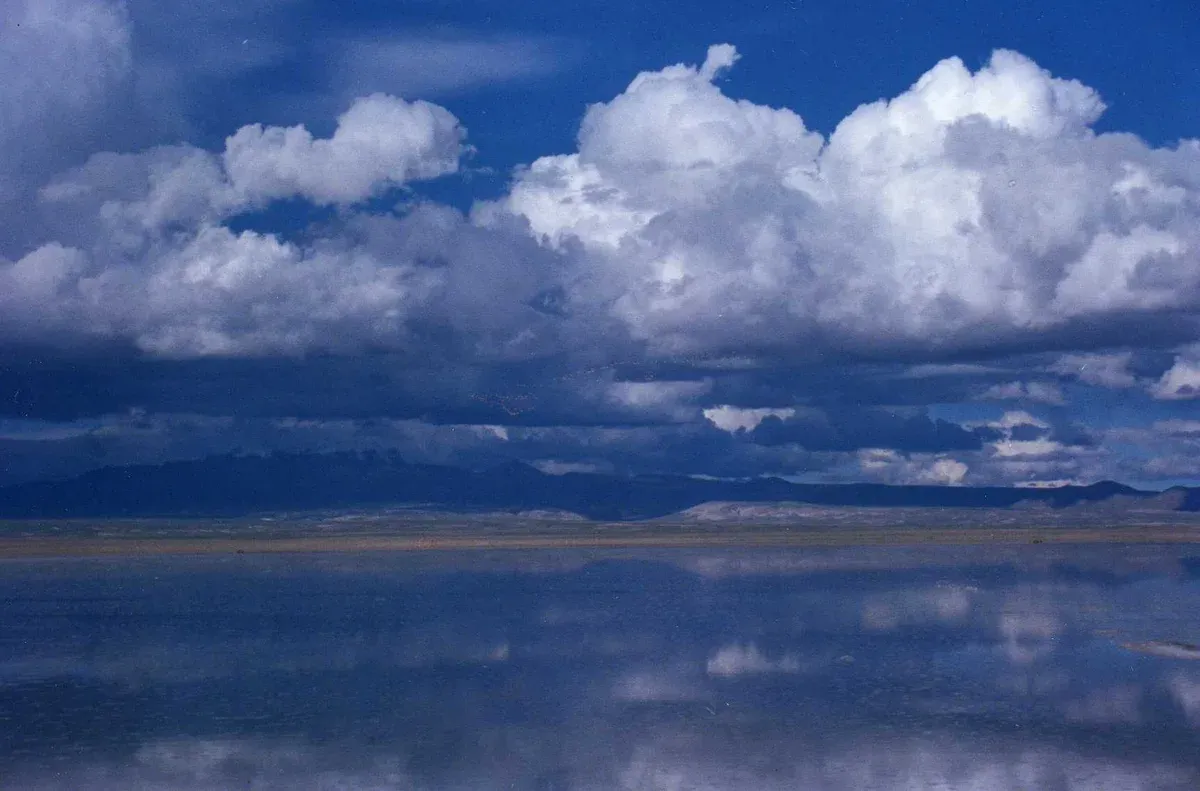
Rainy-season water turns the salar into a mirror. Photo: wallygrom, CC BY-SA 2.0, via Wikimedia Commons
Quick answer Short answer
The best time to visit the Uyuni salt flats for the mirror effect is late January to early March, when January and February average 95.8 mm and 85.0 mm of rain and February is the highest-probability month. For a dry crust, hexagons and the clearest stargazing, April to November works, with September and October offering the mildest mix of day and night temperatures. June to August bring the coldest nights, averaging about -4°C at Uyuni town and colder at the high refuges.
Key takeaways
- For the mirror effect, a sunset mirror-effect day tour timed to the rainy season gives the best odds.
- For dry-season stars and sunset, this 4-hour sunset and stargazing tour leaves around 4:30 PM and includes entrance tickets.
- For the lagoons, flamingos and geysers as well as the salar, the season matters differently. Read the Laguna Colorada and southwest lagoons guide.
- The full month-by-month comparison is in the climate table below.
The Rainy Season and the Mirror Effect
December to March is the wet season on the Altiplano, and it is the only time the mirror effect can appear.
When the Water Arrives
The rainy season runs December to March. The wettest months are January and February, which average 95.8 mm and 85.0 mm of rain over roughly 15 rainy days each at Uyuni town. A satellite-data study puts the peak mirror-effect window at late January through early March, with February the highest-probability month. The reflection needs 2 to 20 cm of standing water and near-zero wind, and a field visit in one February measured the reflective layer at just 1.8 centimeters. The same study names mornings before roughly 9am as the most reliable time, so a calm dawn beats a breezy afternoon.
No operator can promise the mirror. It depends on rainfall, water depth and wind on the day. A sunset mirror-effect day tour puts you on the salar at the likeliest hours, but you should book it wanting the salt flat itself, not only the photograph.
What Deep Water Does to the Route
Thin water makes the mirror. Deeper water closes parts of the circuit. When the flooding is heavy, Isla Incahuasi can become unreachable and some tours skip the island entirely. One day-tour listing states that from January to April the rains can change the itinerary and the island may not be visited because it sits in a flooded part of the salt flat. Another says plainly that Incahuasi is not available in the rainy season. There is no published schedule of exactly which weeks jeeps stop reaching the island, so treat any fixed closure date as unreliable.
The practical effect is that rainy-season itineraries trade the cactus island for more time on the flooded salar itself, which is where the photographs come from. The Incahuasi entrance fee, around 30 Bs (about $3) per person in cash at the booth, only applies on days the island is reached. One listing quotes it at 35 Bs or $5 instead, so carry a little more than the lower figure.
Temperatures in the Wet Months
Rainy season is also the warm season. January and February average daytime highs near 18°C with overnight lows around 5°C at Uyuni town, the mildest nights of the year. March cools slightly, with a mean low of 4.1°C and 45.9 mm of rain. December sits between the two, with 57.7 mm and a 4.8°C average low.
The mild nights are a real advantage for anyone sleeping on the salar's edge or doing an evening run. Even so, evenings on the open crust feel colder than town, and the salt water is cold underfoot. The 4-hour sunset and stargazing tour lists waterproof wellies among its inclusions for the mirror-effect water. What else to bring is covered in the Uyuni packing guide.
Sources: Salar de Uyuni on Wikipedia and UK travel advice for Bolivia.
The Dry Season: Hexagons, Stars and Clear Skies
April to November is almost completely dry, and it is the season most people picture when they imagine the salt flat.
The Salt Crust at Its Sharpest
From April onward rainfall collapses. April averages 3.3 mm, May 0.3 mm with zero rainy days on the ten-year record, and June through September stay near or below 3 mm. With the water gone, the dry crust shows its hexagon pattern across a surface whose elevation varies by less than one meter over the whole 10,582 square kilometers. This is the surface the perspective photos use.
April is where the sources disagree. One geographic source places the mirror season at December to April, and one day-tour listing still names January to April as the months when flooding can cut Incahuasi. The ten-year archive records only 3.3 mm of rain over 0.7 rainy days in April. If your dates fall in April, treat the mirror as unlikely rather than impossible. No published statistic says how often April is fully dry.
Stargazing and the Night Sky
Dry months bring the clearest skies. Uyuni sits at 3,663 m above sea level, and from May through September the archive records under 3 mm of rain a month and less than one rainy day. Sunset-and-stars runs are built around those dry nights. A 4-hour sunset and stargazing tour runs year-round, but its own listing notes that both the mirror effect and stargazing conditions depend on season, rainfall and moon phase and are never guaranteed.
Two timing notes matter. First, moon phase decides how many stars you see, so a full moon floods the crust with light. Second, the dry winter nights are the coldest of the year, with June lows averaging -4.0°C in town, and the 4-hour tour returns around 8:30 PM, well after dark.
The Cold of June to August
June to August is the southern-hemisphere winter, and it is genuinely cold. The ten-year archive puts average nighttime lows at about -3.7°C to -4.0°C at Uyuni town, which sits at 3,656 to 3,700 m depending on the source. Days stay cool rather than warm, with June the chilliest month at an 11.0°C average high and August at 13.1°C.
The cold bites much harder on the 3-day southwest route, because the circuit climbs out of the salar into the Eduardo Avaroa reserve, which spans 4,200 m to 5,400 m. The second night usually falls at a refuge near Laguna Colorada at 4,278 m, and lodges there are basic. One 3-day tour listing warns that the second night's lodge has no heating and that hot showers work about 75% of the time, and it supplies a sleeping bag from May to September for the winter nights. The altitude itself is a separate health question, covered in the altitude sickness guide.
Wind
Wind is the quiet enemy of the mirror effect and the maker of the desert landscapes. The mirror needs near-zero wind, which is why the satellite study rates mornings before roughly 9am as the most reliable window. On the dry crust, wind is what carved the Árbol de Piedra in the Siloli Desert and the rock shapes of the Salvador Dalí Desert into their forms.
The Árbol de Piedra stands about 6-7 m tall on a plateau commonly cited at about 4,500 m. Nighttime at the Polques hot springs illustrates the swing: the pool holds about 29°C while ambient air there can drop to -5°C to -10°C.
Best Time to Visit Uyuni Salt Flats on Video
What the salar looks like under water, the mirror and the rubber boots, filmed in the rainy months. Third-party video by A Couple of Cados. We did not shoot it and have no relationship with the creator.
Month by Month at Uyuni
The table below lays out the full year so you can match a travel date to the conditions you want.
The Full Climate Table
Figures are ten-year averages from the Open-Meteo ERA5 archive covering 2016 to 2025, measured at Uyuni town, lat -20.46, lon -66.83. The mean low column is the average overnight low. Higher ground on the southwest circuit runs colder than these town figures on the same nights.
Rainfall matters more for the route than for comfort: December to March carry 45.9 mm to 95.8 mm a month, while April to October each average 3.3 mm or less. Use this table together with the season notes above to pick your window, and remember that the mirror effect peaks in late January through early March while the driest, clearest stretch runs May through September.
| Month | Avg high | Avg low | Rain (rainy days) | Season character |
|---|---|---|---|---|
| January | 18.2°C | 5.3°C | 95.8 mm (15.3) | Peak rain, mirror effect building |
| February | 17.8°C | 5.1°C | 85.0 mm (14.8) | Highest-probability mirror month |
| March | 17.7°C | 4.1°C | 45.9 mm (8.7) | Rain easing, mirror still likely |
| April | 16.7°C | 0.6°C | 3.3 mm (0.7) | Transition, drying crust |
| May | 13.5°C | -2.2°C | 0.3 mm (0.0) | Driest month, hexagons, cold nights begin |
| June | 11.0°C | -4.0°C | 1.0 mm (0.3) | Coldest nights, dry and clear |
| July | 11.8°C | -3.9°C | 2.5 mm (0.5) | Dry and cold, clear skies |
| August | 13.1°C | -3.7°C | 1.1 mm (0.2) | Dry, cold nights, warming days |
| September | 16.1°C | -1.1°C | 2.9 mm (0.8) | Dry, mildest cold-season mix |
| October | 18.2°C | 0.3°C | 2.9 mm (0.7) | Dry, warmest of the dry months |
| November | 19.3°C | 2.3°C | 14.0 mm (2.8) | First rains arrive |
| December | 19.6°C | 4.8°C | 57.7 mm (8.1) | Wet season begins, warm nights |
The Two Shoulder Windows
Two short windows give a blend of both seasons. Late March to mid-April can offer residual water in places with far fewer rainy days, 8.7 in March falling to 0.7 in April, and milder nights than midwinter. September and October are the reverse bargain: fully dry crust, clear skies and the year's most comfortable combination of day warmth and tolerable night cold, with average highs of 16.1°C and 18.2°C and lows around -1.1°C and 0.3°C.
Neither window guarantees anything. October averages 2.9 mm of rain, so a mirror is very unlikely, and April may be fully dry. But if your priority is the salt flat as a landscape rather than one specific photograph, these months fit most travelers best.
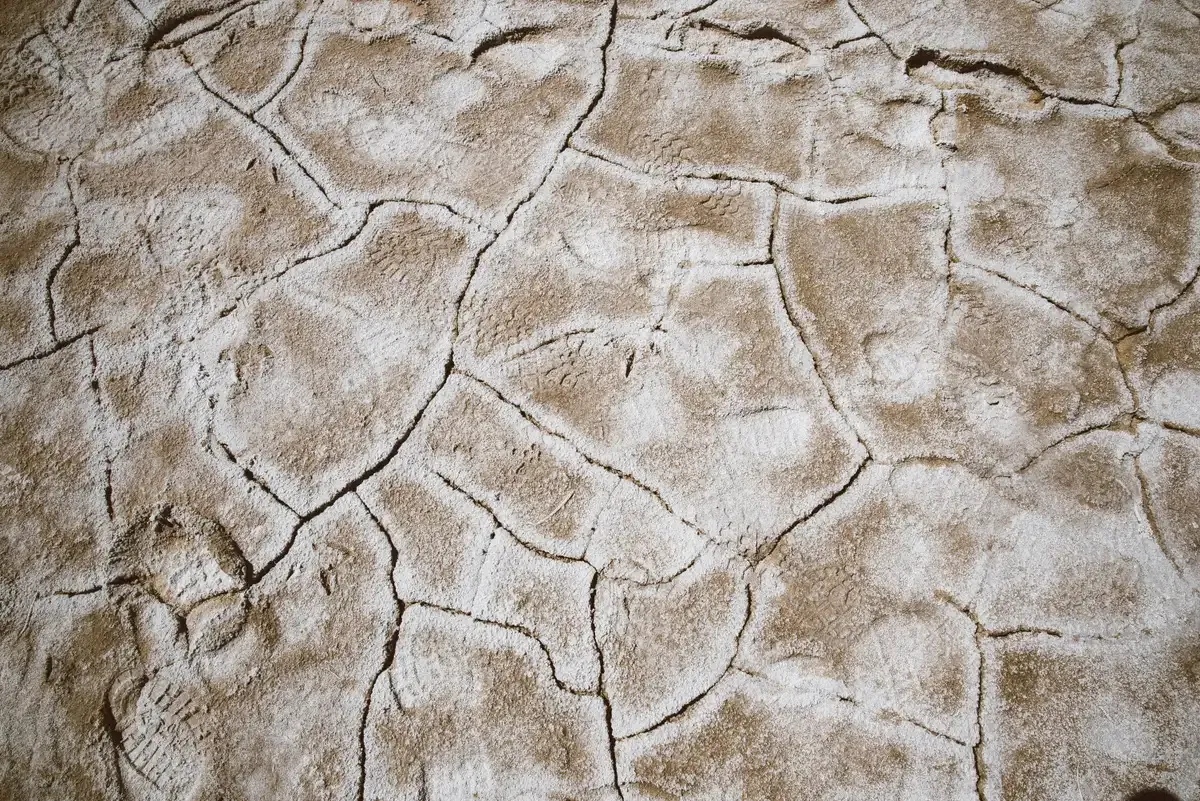
The salt crust close up. Photo: Sandra Chile sandrachile, CC0, via Wikimedia Commons
Sunrise, Sunset and Daylight
Uyuni stays on Bolivia Time, UTC-4, all year, so only the sun itself moves with the seasons.
How the Light Shifts
Two published figures show how far the light moves. Around the June and July winter solstice Uyuni gets its latest sunrises and earliest sunsets, with the latest sunrise around July 5 at about 7:05 AM and the earliest sunset around June 6 at about 5:55 PM. A commonly cited representative figure gives sunrise about 7:04 AM, sunset about 6:02 PM and about 10 hours 59 minutes of daylight. By mid-September a dated snapshot gives sunrise about 6:14 AM and sunset about 6:30 PM, roughly 12 hours and 16 minutes of daylight. The two sources are in mild conflict, one dated and one undated, but the seasonal pattern is consistent.
Why it matters for planning: sunset tours time their main stop to the evening light. The 4-hour sunset and stargazing tour leaves around 4:30 PM and is back around 8:30 PM, and the 5-hour group run goes from 3:00 PM to 8:00 PM, so in June the sun is down well before either returns. Morning mirror hunters should note the study finding that conditions before roughly 9am are most reliable.
Which Tour Type Suits Which Months
The month you pick narrows the tour type that makes sense, and the route you pick changes what the season does to you.
Day Tours versus Overnight Routes
A one-day loop from Uyuni sees the salar only: the train cemetery, Colchani, the crust and Incahuasi Island when it is open. It suits any month, with the seasonal variables being water versus hexagons and afternoon versus evening light. Sunset-focused day tours and dedicated stargazing runs, from $45 to $95, are the natural rainy-season picks because they aim squarely at the mirror hours.
The 3-day southwest routes add the lagoons, the flamingos, the Sol de Mañana geysers at about 4,900 m and Laguna Verde, then either return to Uyuni or end at the Hito Cajón border with Chile. The season hits them harder: the second night usually falls near Laguna Colorada at 4,278 m, and one listing supplies sleeping bags specifically from May to September. The wet season softens the cold, but one 3-day listing warns that its itinerary may change due to weather or road conditions, especially in the rainy season from December to April.
Matching the Month to the Trip
If the mirror effect is the whole reason for your trip, book February or early March and keep your itinerary flexible with a sunset run like the sunset mirror-effect day tour. If stargazing is the goal, aim for May to August, when the archive records 2.5 mm of rain or less a month, and accept nights near -4°C, or September for nearly as good with milder cold. If you want the lagoons and can handle cold, the dry months bring the lagoons under a dry sky, from the red water of Laguna Colorada at 4,278 m to Laguna Verde under Licancabur at 5,868 m.
Flamingo numbers are highest in the austral summer, though, above 40,000 birds against winter lows under 1,000. If you are crossing to or from San Pedro de Atacama, note that the Bolivian side of the pass sits at 4,480 m and Chilean formalities are completed in San Pedro town, about 45 km away, so the logistics run in every season. The San Pedro to Uyuni crossing guide covers that trip end to end.
| Months | Best for | Trade-off | Suited tour |
|---|---|---|---|
| Late Jan to early Mar | Mirror effect, flamingo numbers | Incahuasi may flood, afternoon rain | Sunset mirror day tour |
| Apr | Transition, drying crust | Mirror unlikely, surface mixed | Standard day loop |
| May to Aug | Hexagons, stargazing, clear skies | Nights to -4°C, colder refuges | Stargazing run, 3-day lagoons |
| Sep to Oct | Dry crust with mild nights | No water on the salar | Day loop or 3-day route |
| Nov to Dec | Warm days, first mirror chances | Increasingly wet afternoons | Sunset mirror day tour |
What Season Does Not Change
Fees do not move with the calendar. The Eduardo Avaroa reserve entrance for foreign visitors is 150 Bs (about $13) and Isla Incahuasi is around 30 Bs (about $3), both paid in cash and usually not included in the headline tour price. Expect those costs in any month the sites are reachable.
Overnight southwest routes carry extra cash costs on top in every season, and one 3-day listing adds $62 in mandatory extras to a $290 headline, taking the real total to $352 per person before optional transfers.
Rainy Season versus Dry Season
Both halves of the year deliver the salar at its best, just not at the same thing.
What we genuinely like
- Rainy season, December to March, produces the mirror effect, with February the highest-probability month and mornings before 9am most reliable
- Wet-month nights are the mildest of the year, averaging about 5°C in January and February
- Austral summer brings peak flamingo numbers at Laguna Colorada, with concentrations reported above 40,000 birds against winter lows under 1,000
- Dry season, April to November, delivers the hexagon crust, perspective photos and the clearest stargazing skies of the year
- Shoulder months of September and October combine dry crust with night lows around -1.1°C and 0.3°C, well above the midwinter -4.0°C
The honest downsides
- No operator can promise the mirror effect, and deep water can make Incahuasi Island unreachable with no published closure calendar
- June to August nights average about -4°C at Uyuni town and are colder at the 4,278 m Laguna Colorada refuge, where heating is not guaranteed
- April is a gamble, as it can be fully dry or still hold water, and no statistics settle which
- Winter daylight is shorter, with the earliest sunsets near 5:55 PM, which compresses evening tour timing
Who it's NOT for: If you need both the mirror and the hexagons in one trip, no month delivers them, so choose which photograph matters more.
Best Time to Visit Uyuni: FAQ
What is the best month to visit the Uyuni Salt Flats?
February has the highest probability of the mirror effect, per a satellite study that puts the peak window at late January through early March. For a dry crust and stars, June to August is clearest but coldest, with nights near -4°C. Check the Uyuni tour price comparison before you lock dates.
What time of year are the salt flats wet?
The rainy season runs December to March, with the wettest months January and February averaging 95.8 mm and 85.0 mm of rain. Conditions suitable for the mirror need 2 to 20 cm of standing water, and one February field measurement found the reflective layer just 1.8 cm deep. A sunset mirror-effect day tour times its main stop to the evening light.
How many days do you need in Uyuni Salt Flats?
One full day covers the salar itself, and that is enough if the salt flat is your only goal. The colored lagoons, the Sol de Mañana geysers at about 4,900 m and Laguna Verde need a 3-day route such as this 3-day salt flat and lagoons tour, which runs 2 nights on the circuit.
Is the mirror effect guaranteed in the rainy season?
No. It needs the right water depth, near-zero wind and usually a calm morning before roughly 9am, and operators state plainly that it depends on season, rainfall and conditions and is never guaranteed. February gives the best odds, and a sunset and stargazing tour puts you on the salt at dusk, when you can still try for a reflection.
Can you visit Incahuasi Island during the rainy season?
Sometimes, but not reliably. Deep flooding can make the island unreachable, and one tour listing says the island may not be visited from January to April because it sits in a flooded part of the salt flat. No published source names the exact weeks this happens, so confirm at booking. The Salar de Uyuni tour with sunset says outright that the island is not available in the rainy season. In dry months the island visit adds a 30 Bs (about $3) fee and a 30 to 45 minute trail loop.
How cold does it get on a 3-day Uyuni tour?
June to August average nighttime lows run about -3.7°C to -4.0°C at Uyuni town, and the circuit climbs above that, with the second night commonly at a refuge near Laguna Colorada at 4,278 m. Lodges there are basic, one listing notes no heating and hot showers that work about 75% of the time, and sleeping bags are supplied from May to September. How to handle the elevation itself is covered in the altitude sickness guide.
Does the season change the price of an Uyuni tour?
The catalog lists one headline price per tour, from $45 for a 5-hour stargazing run to $450 for the 3-day route ending in San Pedro de Atacama, and none of those listings quotes a separate rainy-season rate. What changes is what is reachable: flooded-season itineraries may cut the Incahuasi stop and its 30 Bs (about $3) fee. Fees that are paid, like the 150 Bs (about $13) Eduardo Avaroa reserve entrance, apply in every month. For full trip totals by tour type, see the Uyuni tour cost guide.